
Airport History
1920s - The Best Landing Field in the South Opens for Business
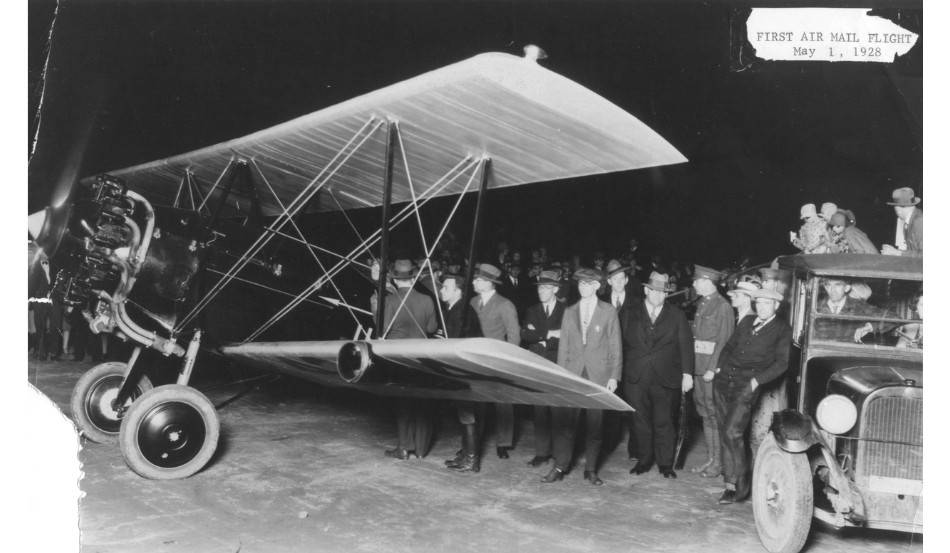
1927 – Eight miles west of Greensboro, the airport begins as a pasture labeled by noted racing pilot Captain Roscoe Turner as “the best landing field in the South.” The Tri-City Airport’s Lindley Field formally opens on May 28. In July, the first passenger flies from the airport in a chartered plane to New York City.
1928 – Lindley Field becomes a stop on the eastern mail route. Pitcairn Aviation, the government’s airmail carrier, makes the first delivery of air mail in North Carolina on May 1 at 8:15 p.m. Pilot Sid Malloy lands with two incoming bags of mail and takes on three sacks of mail for his next stop, Atlanta.
1930s - N.C.'s First Passenger Service
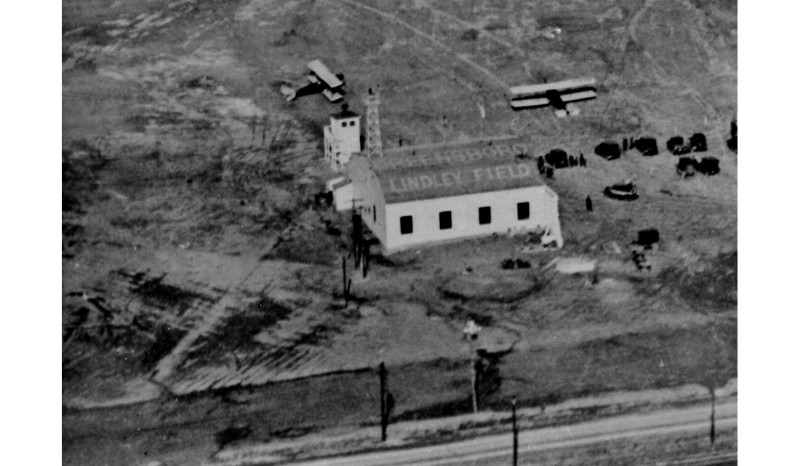
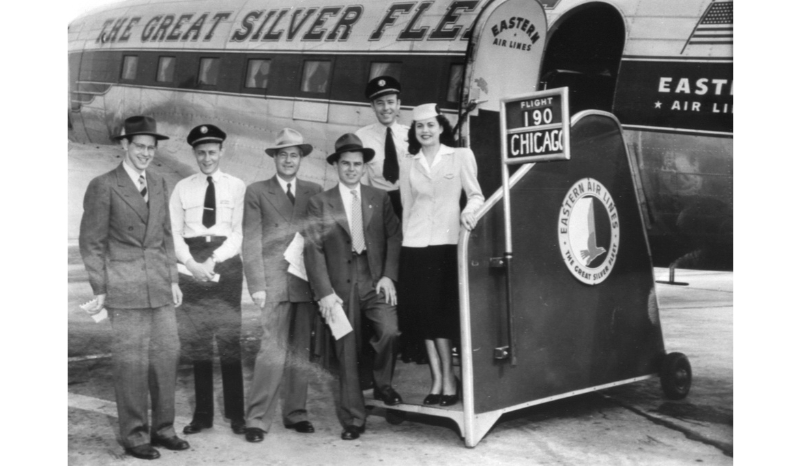
1930 – Pitcairn Aviation becomes Eastern Air Transport
1931 – Eastern Air Transport launches passenger service along a route that connects 16 Eastern Seaboard cities, including North Carolina’s first passenger service from the Triad. By 1934, Eastern Air Transport is known as Eastern Air Lines.
1935 – Lindley Field is closed by order of the U.S. Department of Commerce because of two near crashes.
1937 – Lindley Field reopens with two new paved 2,500-foot runways and a passenger terminal.
1940s - The Airport Authority Is Created
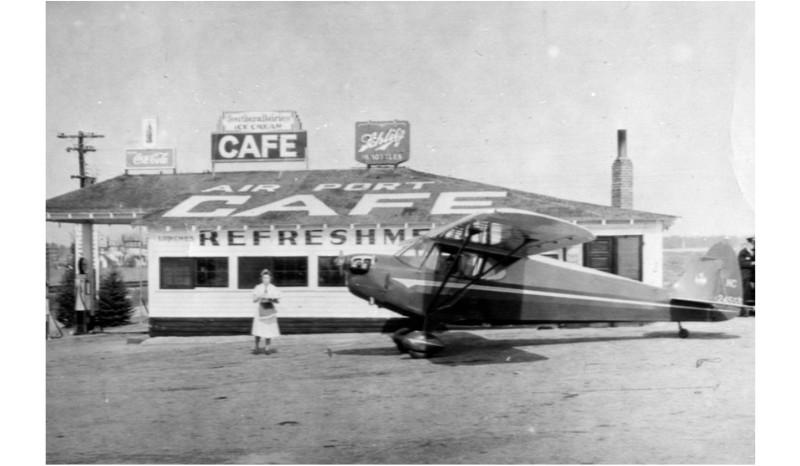
Passenger airlines servicing the airport:
- Eastern Air Lines
1941 – The Greensboro-High Point Airport Authority is created by the North Carolina General Assembly to own, operate and manage the airport in Guilford County.
1942 – On April 22nd, the Airport Authority holds its inaugural meeting. Greensboro department store executive Joseph T. Martin is elected the authority’s first chairman. High Point resident R.T. Amos becomes vice chairman and Caesar Cone of Greensboro begins a 26-year career as secretary.
Throughout the 1940s – the U.S. Army Air Corps assumes control of the airport for the duration of World War II. The airport is a hub for the Overseas Replacement Depot (ORD), a refueling station, and a training site for fighter and bomber pilots. The Army builds a second steel hangar and a control tower.
Throughout the 1940s – The Airport Authority continues to invest in growth after WWII, adding acreage, lengthening runways, constructing a taxiway, and installing runway lights.
1950s - A Decade of Planning, Growth and Strategic Development
- Eastern Air Lines
- Capital Airlines
- Piedmont Airlines
A decade of growth and planning sets a precedent for strategic development of the regional airport.
1952 – The Airport Authority extends runway 14/32 and adds new lights to runway 5/23.
1952 – A new air traffic control tower is constructed and an instrument landing system is installed.
1955 – The Airport Authority acquires more than 900 acres of land around the airport to save it from other development, and work begins on a new terminal.
1958 – Greensboro-High Point Regional Airport proudly unveils its new 34,000-square foot airport terminal, featuring seven aircraft gates, a restaurant, bank, operations office, and counters for tickets and rental cars.
1960s - A Master Plan Takes Shape
Passenger airlines servicing the airport:
- Piedmont Airlines
- Eastern Air Lines
- United Airlines
1961 – Caesar Cone finances an appeal to the Civil Aeronautics Board to designate what has come to be known as the Greensboro-High Point Airport as the Triad’s official airport.
1965 – Fire and rescue facilities are erected at the airport.
1967 – The airport hires Roger Sekadlo, a savvy planner and administrator, as its first Executive Director. Sekadlo would hold this post for 20 years.
1968 – Under Roger Sekadlo’s guidance, the Airport Authority adopts in March a $63 million master plan. This package of dramatic changes required the relocation of the entire airport facility to the northwest area of the airport’s property, as well as runway improvements, expanded general aviation and cargo areas, and the design of a new terminal.
1968 – United Airlines in April begins its first jet passenger service in North Carolina with flights from Greensboro to Newark aboard Boeing 727 tri-engine planes.
1970s - Passenger Service Expands, Economic Development Seeds are Sown
- Delta Air Lines
- Eastern Air Lines
- Piedmont Airlines
- United Airlines
The airport gains greater prominence on the East Coast, offering passenger service from carriers Delta, Piedmont, United and Eastern airlines. Cargo carriers, including the postal service, textile manufacturers, and Federal Express – a new overnight letter and package delivery service – ship tons of freight each year. General aviation also expands, with Air Service investing in a new 10-acre site and the arrival of newcomer Atlantic Aero.
1970 – Delta Air Lines begins service from Greensboro-High Point Airport.
1970 – Runway 5/23 becomes the longest commercial runway in the state at 8,200 feet.
1970 – Textile manufacturer Blue Bell moves into its new cargo hangar at the airport.
1971 – 18 specially equipped chairs are installed with television sets in the airport terminal. Passengers pay a quarter for each half-hour of watching with sound delivered from speakers inside the headrests of the seats.
1972 – Ten years after joining the Airport Authority, Stanley Frank is elected as its 4th chairman, a position he would occupy for 19 years. Frank had quickly become a presence at the airport after moving to Greensboro in 1936, logging thousands of miles as a private pilot. His vision of the airport and its role in the Triad economy would drive the airport’s growth and planning for nearly three decades.
1972 – President Nixon holds a rally at the airport hosted by country music legend Roy Acuff.
1976 – Hermon F. Fox, a political leader, engineer and professor at North Carolina A&T State University becomes the first black member of the Airport Authority board.
1978 – The first Boeing 747 lands at the airport, a charter flight ferrying passengers to Hawaii.
1980s - A New Terminal Opens and Say Hello to PTI/PTAA
- Delta Air Lines
- Eastern Air Lines
- Piedmont Airlines
- United Airlines
- People Express Airlines
- USAir
1980 – Ground is broken for the new, spacious airport terminal by blowing up two silos on the Northwest quadrant of the airport.
1981 – The Airport Authority assumes responsibilities for crash, fire and rescue from Guilford County.
1982 – A new passenger terminal opens with great fanfare. It remains the heart of the current airport terminal.
1982 – Piedmont Airlines, the largest carrier serving the Triad, constructs a major maintenance facility to service its fleet.
1982 – The airport’s main runway is extended to 10,000 feet, making it the longest in the state.
1983 – Marriott opens a $16 million, 300-room hotel on the airport property.
1984 – Highly publicized, low-fare carrier People Express Airlines begins service at the airport.
1985 – The Airport Authority membership is expanded to seven with representatives being appointed by Forsyth County Commissioners and the Winston-Salem Aldermen.
1987 – The airport is officially renamed the Piedmont Triad International Airport (PTI).
1987 – Stanley Frank is named PTI’s Chief Executive Officer.
1988 – The Airport Authority is renamed the Piedmont Triad Airport Authority (PTAA).
1990s - Economic Growth Kicks Into Gear as Johnson Named Exec. Dir.
- American Airlines
- Continental Airlines
- Delta Airlines
- United Airlines
- US Airways
- USAir
- Wheeler Airlines
1990 – TIMCO Aviation Services opens its world headquarters at PTI. Over the following two decades, the company would grow into one of the world’s largest independent aircraft maintenance, repair and overhaul providers. TIMCO supports leading global airlines, governments and aircraft leasing companies with comprehensive, individually tailored aircraft care services. The company employs nearly 3,000 people in facilities at a number of airports across the country.
1991 – Eugene Johnston is named PTAA’s 5th board chair.
1993 – F. Hudnall Christopher is named PTAA’s 6th board chair.
1993 – The Airport Authority appointed Edward A. “Ted” Johnson Executive Director of PTI. First hired by the airport in 1968, Johnson held a number of posts, including director of development. Johnson knew the airport and its carriers and partners like no one else. On his watch, PTI sees dramatic change in air service and investment at the airport. Possibly Johnson’s most important contribution is the successful recruitment of the FedEx mid-Atlantic sorting facility to PTI, which includes the construction of a third runway at the airport. Combined, these two accomplishments position PTI as the catalyst for regional growth.
1994 – Cessna Aircraft Company, later referred to as Textron Aviation, holds the grand opening of its Greensboro Citation Service Center. The company offers airframe and engine maintenance, inspection and repair capabilities, as well as full avionics troubleshooting, repair and modification capabilities.
1998 – FedEx Corporation announces its intentions to build a mid-Atlantic hub at PTI, one of only five FedEx hubs in the country. In addition to the hub, the project would include the construction of a parallel, 9,000-foot runway, the construction of new roads around the airport, and the construction of a new cloverleaf airport entrance. The total cost of these improvements was nearly $500 million.
2000s - PTI Adds Global Leaders in Manufacturing and Cargo
- Air Canada
- AirTran
- Allegiant Airlines
- American Airlines
- Continental Airlines
- Delta Airlines
- Eastwind Airlines
- Independence Air
- Northwest Airlines
- Skybus
- United Airlines
- US Airways
2000 – PTI continues to play a central role in regional growth. Guilford Technical Community College Aviation Center at PTI expands its training program for airline mechanics, boosted with a $250,000 gift from Tom Davis.
2003 – H. Henry Isaacson is named PTAA’s 7th board chair.
2005 – Comair selects PTI for its southeastern maintenance facility location, which opens in 2006.
2006 – The airport opens an expansion to the North Concourse, which adds another 40,000 square feet to the terminal and brings the number of gates to 25. The airport also opens a 43,000 square-foot expansion to the main terminal to accommodate security gates at the north and south concourses.
2007 – Honda Aircraft Company selects PTI as its global headquarters. In subsequent years, Honda Aircraft Company would expand the campus to include administrative offices, its research and development center, its manufacturing center and the site of a major repair and maintenance facility. The company employs 1,000 people at these facilities on the airport campus.
2007 – Allegiant Airlines begins low-fare service to Florida destinations, eventually establishing itself at the airport for its low-fare service.
2008 – Cessna announces completion of its service center expansion at PTI, one of the company’s busiest centers, adding more than 69,000 square feet of ramp space bringing the total ramp space to more than 137,300 square feet.
2008 – GTCC expands its aviation school presence with the construction of a $7.5 million, 41,000 square foot classroom building near the airport campus and by adding an aviation manufacturing degree program.
2009 – FedEx opens its mid-Atlantic Hub at the airport, establishing PTI as a key link in the company’s national overnight delivery system. The FedEx mid-Atlantic Hub, located on a 175-acre site at the airport, consists of seven buildings, a fuel farm and an aircraft ramp with eleven gates. The 475,000-square-foot sort building is the center point of the facility and is designed to handle 24,000 packages per hour with provisions in place to expand to 48,000 in the future.
2010s - New Leadership and Bold Plans For Expanding PTI's Impact on N.C.
- Allegiant Air
- American Airlines
- Continental Airlines
- Delta Airlines
- Frontier Airlines
- Northwest Airlines
- Spirit Airlines
- United Airlines
- US Airways
2010 – The airport opens a 9,000-foot parallel runway, which allows simultaneous aircraft takeoffs and landings at the airport for the first time, and opens new opportunities for airside development at the airport.
2010 – Ted Johnson retires in October after 17 years as the airport’s executive director and a career at the airport that started in 1968. Kevin Baker is tapped to succeed Johnson as executive director.
2010 – The airport unveils an ambitious master plan update that includes new facilities, such as an improved control tower, and establishes the airport as a key aerospace center on the East Coast. The master plan reveals a vision to connect the airport to the existing property by constructing a taxiway bridge over I-73 and for expanding the airport’s reach by acquiring property northwest of the airport.
2011 – The airport begins a major interior renovation project to provide passengers with a superior airport experience. The renovation includes the installation of free wireless internet and charging stations for passenger devices, and numerous interactive kiosks guiding passengers to ground transportation and nearby accommodations and restaurants.
2013 – Honda Aircraft Company opens a 90,000 square-foot customer service center at PTI, which will serve as the corporate base for Honda Aircraft Company’s customer service organization. It includes a service parts warehouse for parts distribution and a maintenance hangar.
2014 – Stephen Showfety is named PTAA’s 8th board chair.
2016 – After an extensive certification process, Honda Aircraft Company begins manufacture of the HondaJet at its PTI facility. The light business jet soon becomes a top seller in its class.
2017 – The North Carolina Department of Transportation completes work on a nine-mile stretch of I-73 that runs through airport property and includes a taxiway bridge that will connect the existing airport property to approximately 800 acres of airport property on the opposite side of the interstate. This property will be prepared for economic development and is dubbed by economic developers as the “airport megasite.”
2018 – Spirit Airlines announces new service at PTI. The low-cost carrier provides affordable nonstop flights to Orlando, Tampa, and Fort Lauderdale.
2018 – HAECO completes work on a 250,000 square foot hanger at PTI. The company’s fifth hanger at PTI is the largest maintenance space within the HAECO Americas portfolio. At full capacity, the hangar will employ an additional 500 workers.
2019 – The FAA breaks ground on a new, $61 million,180-foot air traffic control tower to replace the current tower, which has been in service since 1974.
2019 – James T. White is named PTAA’s 9th board chair.
2020s - Innovative Aerospace Leaders Consistently Select PTI
- Allegiant Air
- American Airlines
- Breeze Airways
- Delta Airlines
- Frontier Airlines
- Spirit Airlines
- United Airlines
2020 – Paul K. Mengert is named PTAA’s 10th board chair.
2020 – Honda Aircraft Company begins operations at its newly opened Wing Production and Service Parts Facility, located at the company’s world headquarters at PTI. The new 83,100 square-foot facility is the latest addition to the 133-acre Honda Aircraft Company campus, and represents an additional investment of $24.3 million, bringing the total capital investment in its North Carolina facilities to more than $245 million.
2021 – PTI hosts a Triad Honor Flight for the first time in a decade, as approximately 100 WWII, Korean, Cold War, and Vietnam veterans depart from PTI on Veterans Day to tour monuments and memorials in Washington, D.C., led by the newly created non-profit, Triad Honor Flight organization. Semi-annual flights are scheduled to continue throughout the decade.
2022 – Boom Supersonic announces the selection of PTI for its 65‑acre “Overture Superfactory,” an advanced manufacturing campus to build its next‑generation supersonic passenger aircraft, a project projected to bring more than 1,750 jobs by 2030 and representing a breakthrough for sustainable high‑speed aviation in the U.S.
2022 – From a project led by an all-woman team – a first in FAA history – PTI on Nov. 15 unveils its new 180‑foot tall air traffic control tower and integrated Terminal Radar Approach Control (TRACON) facility, replacing the previous 1974 tower, strengthening PTI’s operational capacity, and bolstering its long‑term aerospace and commercial growth potential.
2023 – Ground‑breaking commences on Jan. 26 for Boom Supersonic’s Overture Superfactory at PTI, marking PTI’s transition into the next era of aerospace manufacturing as a premier global hub for advanced aviation production.
2023 – Marshall Aerospace announces on April 25 it will establish a U.S. maintenance, repair and overhaul (MRO) facility at PTI, investing around $50 million and creating approximately 240 new jobs to support the C‑130 Hercules fleet and anchor PTI’s growing role as a destination for defense‑aerospace services and manufacturing. The project broke ground in September.
2023 – Silver Airways announces on May 17 new nonstop services from PTI to Nashville (BNA) and Orlando (MCO).
2023 – Honda Aircraft Company announces PTI will house production of its new light‑jet program: the HondaJet Echelon, designed to offer trans‑continental nonstop range across the U.S., single‑pilot capability, advanced automation features and up to 11 seats, marking a major leap in the company’s ambition for “skyward mobility.”
2024 – Boom Supersonic on June 17 marks the completion of construction of the Overture Superfactory at PTI – the first U.S. supersonic airliner factory and a major economic development and branding moment for the airport and region.
2025 – Graham Bennett named PTAA’s 11th board chair.
2025 – Breeze Airways in June begins nonstop service to/from Hartford’s Bradley International Airport (BDL) and Orlando International Airport (MCO).
2025 – Honda Aircraft Company begins production of its next‑generation HondaJet Echelon at its facility adjacent to PTI, designed to carry up to 11 occupants, offers a projected range of 2,625 nm and introducing advanced features such as autothrottle, Emergency Autoland and enhanced electrification.
2025 –JetZero announces in June its decision to establish its first U.S. manufacturing facility at PTI, committing more than $4.7 billion and more than 14,500 jobs over time, where it will build the next‑generation “Z4” all‑wing commercial aircraft, reinforcing PTI’s evolution into a global aerospace innovation campus.